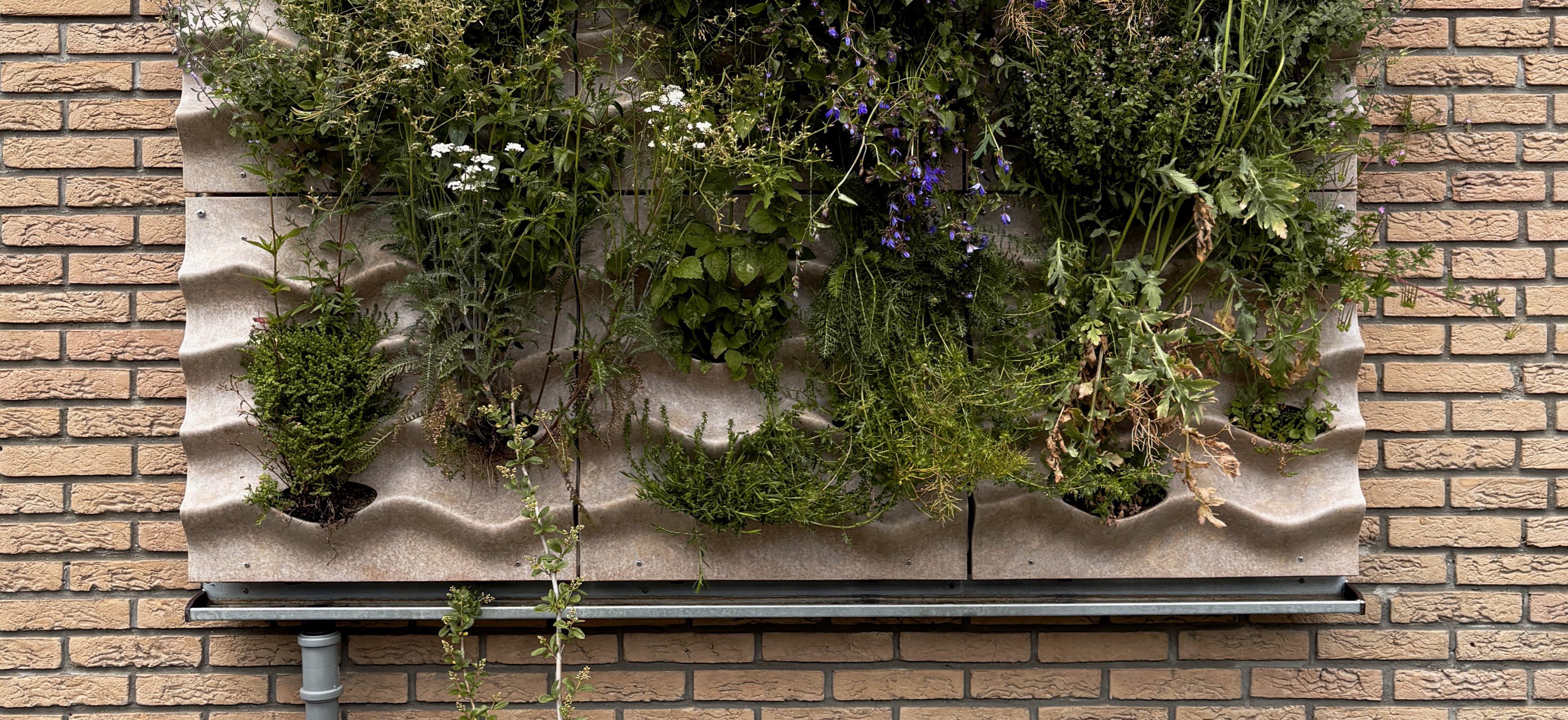
When Leafy won the BK-Launch At-Launch Award in November 2024, founders Boyan Klifman and Naud van der Padt were on the verge of a big decision: leave their jobs at BAM and go all-in on their green facade panel. The award gave them the push they needed. Nearly two years later, they have a certified product, paying clients and a growing team. This is how they got there.
Green Facades, Built for Builders
The idea for Leafy did not come from a design studio. It came from the construction site. Both founders, Boyan Klifman and Naud van der Padt, worked at BAM, coming from different backgrounds but sharing the same observation: the demand for greenery in the built environment was growing fast, but the products available to meet that demand were often too expensive, too complex or too maintenance-heavy to apply at scale.
Naud had already been developing the concept during his studies, researching green facades and the commercial and ecological potential behind them. Boyan, who studied Mechanical Engineering at TU Delft, brought the technical expertise needed to turn the idea into something actually buildable. Together, they set out to design Leafy as builders for builders: modular, demountable, easy to install and easy to maintain.
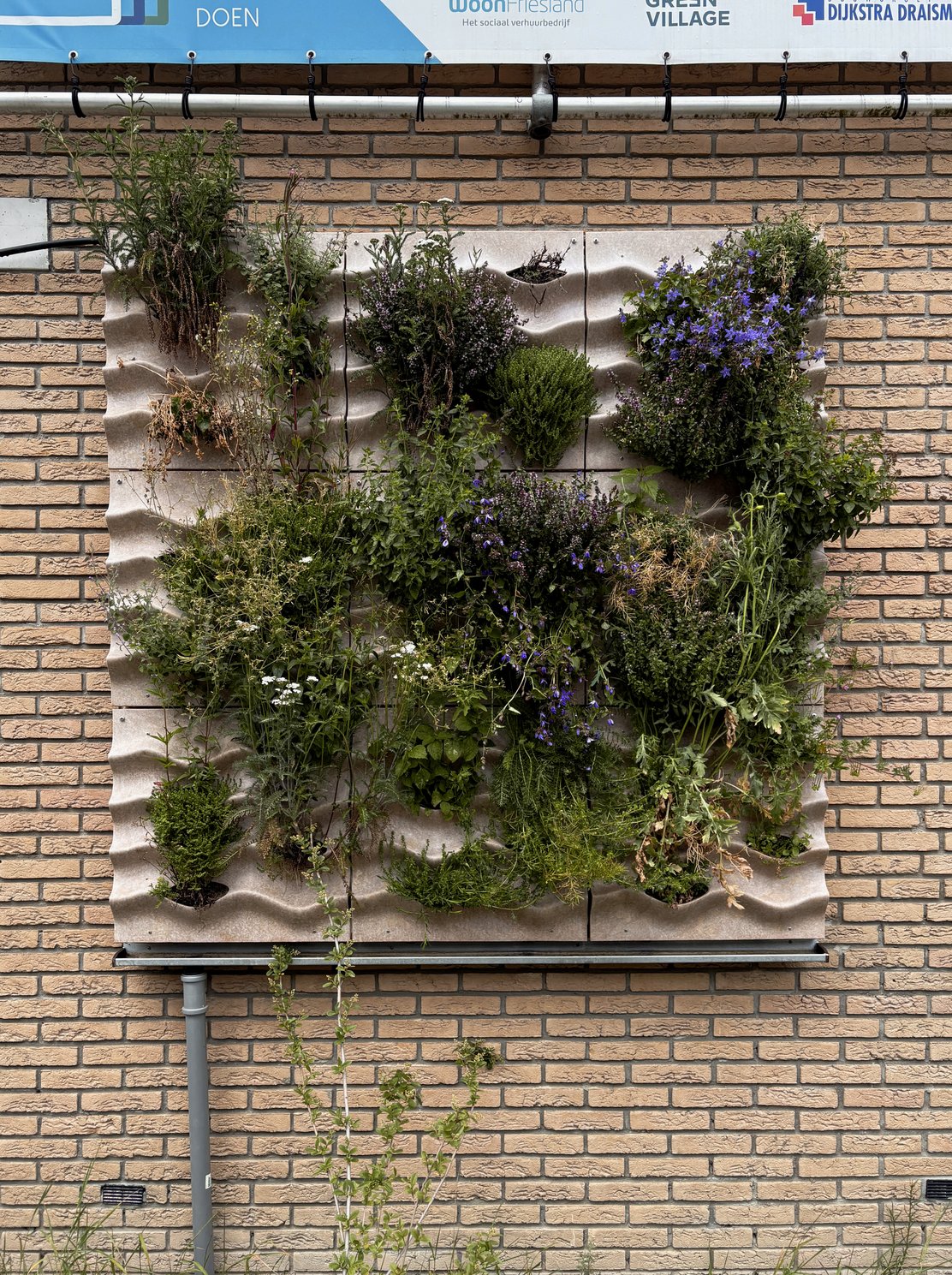
The result is a green facade panel built around a frame of Accoya wood, a sustainably sourced softwood that has been acetylated to make it rot-resistant, filled with a natural growing substrate and ecologically selected plants, and irrigated passively using rainwater. "We want to let nature do the work," Boyan says. "That keeps costs down and the system much more robust."
Taking the Leap
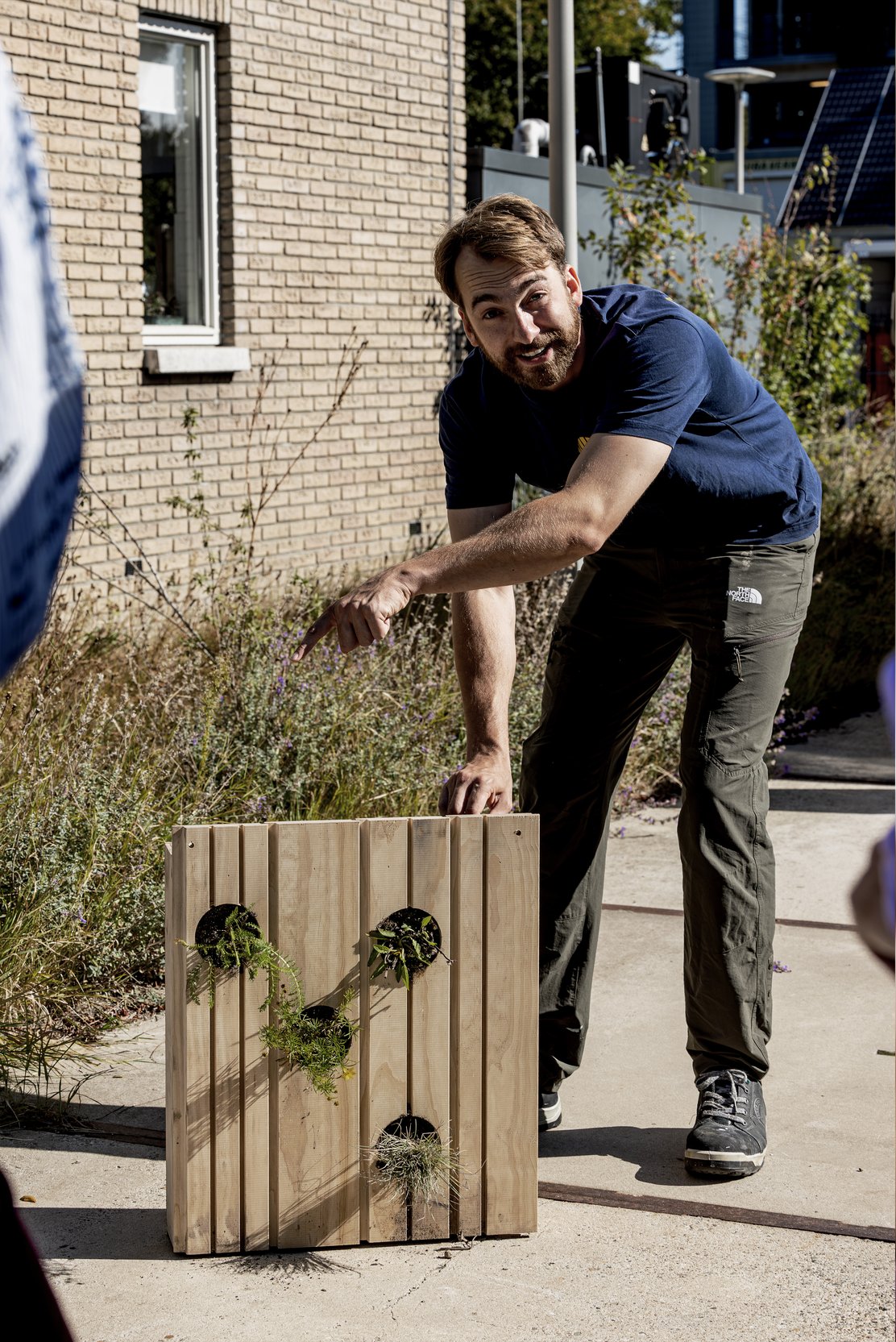
Leafy entered the BK-Launch Entrepreneurship Awards at a pivotal moment. The team had been working on the concept part-time for around two years alongside their jobs at BAM, spending weekends on customer research and prototyping. They were on the verge of going full-time, but had not yet taken the leap.
Winning changed that. The prize money helped, but Boyan is quick to point out that the validation mattered just as much. "It confirmed that what we were working on was genuinely interesting to others. That gave us the confidence to actually make the jump." The BK-Launch network also introduced them to new contacts, including Lignitec, another award winner that evening. A year later, that chance encounter had turned into a formal collaboration.
Building the Product
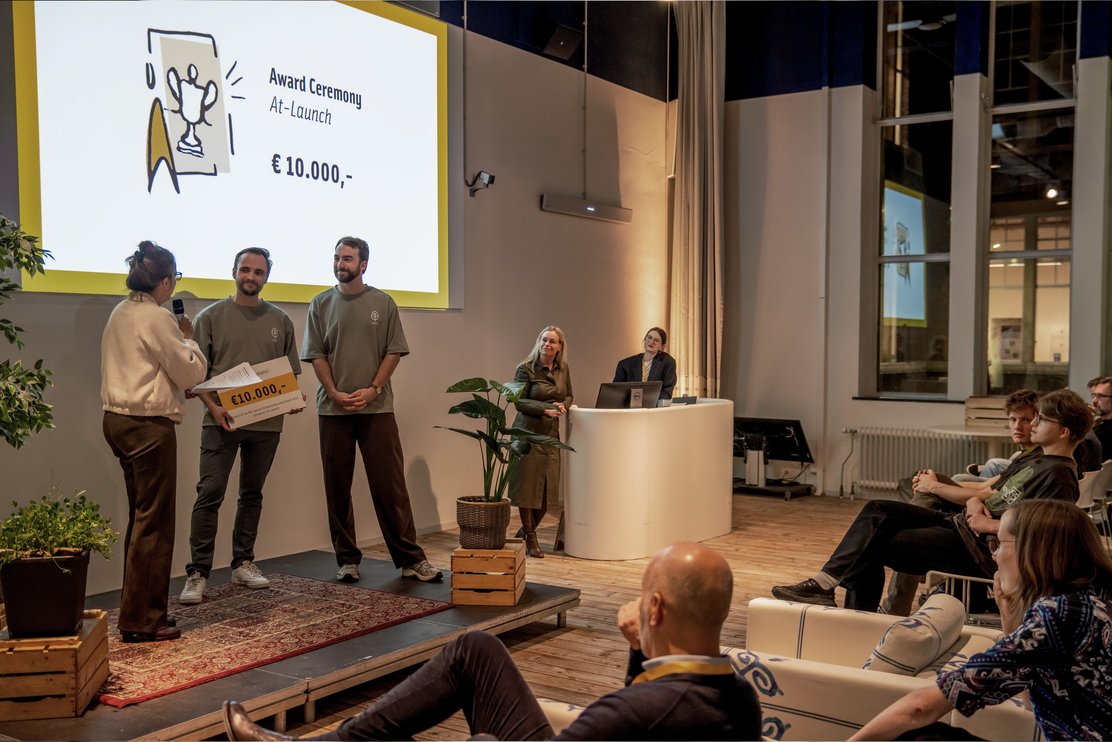
Going full-time meant one thing above all: product development. The past year and a half has been spent turning what was essentially a prototype into something that can be sold, installed and certified. That process has been slower than expected, in ways that are, as Boyan puts it, inherent to building a hardware company.
"Every experiment takes weeks or seasons rather than minutes," he says. "You can draw up an idea quickly, order the parts, build it, install it and monitor it. But if you are working with living plants, you need at least a full growing season to see how it behaves. Ideally longer." Certification added another layer of time. Getting fire safety and structural safety validated took months, but it is now done. Leafy can sell their panels with the technical backing to support it.
The team has also grown. Alongside Boyan and Naud, there is now a full-time colleague handling production and installation, and at any given time three or four interns and graduates from institutions including Wageningen University, contributing expertise in plant biology, substrate development and marketing. Leafy is also actively looking for a new permanent team member with a background in ecology or biology, someone who can take the biological side of the product further.
Two Products, One Principle
Leafy is currently developing two complementary products. The green facade panel, their core product, offers immediate, high-density greenery with a wide variety of plant species. A climbing frame system, made from the same Accoya wood and designed to the same modular logic, offers a simpler and more affordable alternative where plants gradually cover the facade over time.
"In most projects, the ideal solution is actually a combination of both," Boyan explains. "Panels for the areas where you want immediate impact and biodiversity, climbing frames to cover the larger surface area more cost-effectively."
The front of the panel has also evolved from earlier prototypes. Leafy now works with rectangular panels and is developing multiple options for the facade face, including Accoya wood, bio-based composite panels from NPSP, and a version using Lignitec's bio-based board material. The latter is being developed in collaboration with Mecanoo and facade builder Aldowa, as part of a joint project to design and test bio-based green facade elements at The Green Village.
One design principle runs through all of it: the panel must look good even without plants. "We kept hearing from architects that a facade looks great at handover, but then winter comes and you are staring at bare patches and steel mesh," Boyan says. "We design so that the panel itself is already something worth looking at."
More than Aesthetics
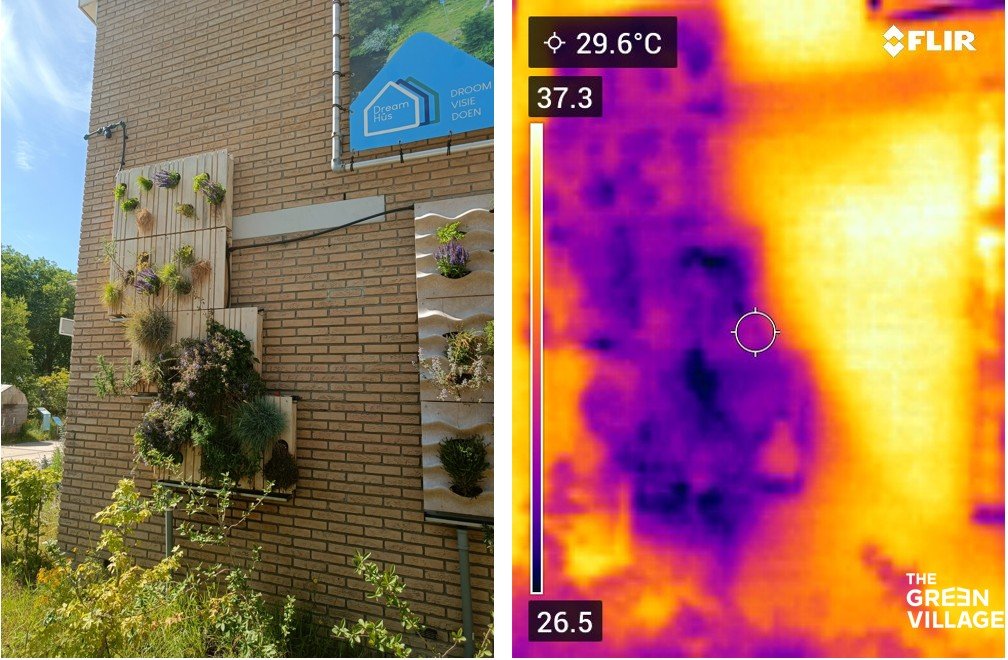
The benefits of green facades are well documented: biodiversity, water buffering, mental wellbeing. But one benefit is becoming increasingly hard to ignore: cooling. With summer temperatures rising, a south-facing facade without greenery can reach 50 to 60 degrees. With a green facade in front of it, that same surface stays below 30. "We spend all our time in the Netherlands thinking about insulation in winter," Boyan says. "We need to start thinking just as seriously about keeping buildings cool in summer."
Leafy's target clients include large construction companies and municipalities like Amsterdam, Rotterdam and Leiden, all of which are increasingly prioritising greenery in the built environment.
Put Your Idea Out There
Asked what advice he would give to other young entrepreneurs, Boyan points to one thing above all: put your idea out into the world as early as possible. "You can brainstorm in your own head for a long time, but at some point you get nothing more from it. The moment you share it, you start learning." Competitions, pitches and conversations all accelerate that process in ways that internal planning simply cannot.
His other piece of advice is equally straightforward: just start. The idea will never be perfect before you begin, and waiting until it is means never beginning at all. For Leafy, the willingness to start before everything was ready, and to keep improving in public rather than in private, has shaped everything that followed.
Two years on from winning the BK-Launch award, what started as weekend prototyping has become a certified, commercially active product with a growing team and paying clients.
Are you building something in the built environment, or do you know someone who is? Applications for the BK-Launch Entrepreneurship Awards 2026 are open until 13 September. Find out more at bk-launch.nl/awards.
Category: Community