The applications for the BK-Launch Entrepreneurship Awards 2026 are in! This year, a diverse group of ventures has applied, each with their own ideas, ambitions and approaches to addressing challenges in the built environment.
From early-stage concepts to ventures already taking their next steps in the market, the applications reflect the creativity and entrepreneurial spirit within our community.
Below, we introduce all ventures that applied for this year's Awards. At the end of October, we will announce the three nominees in each category. These nine ventures will pitch their ideas during the Awards ceremony on 19 November, where the winners will be selected.
On this page you'll find:
The At-Launch Award is for aspiring entrepreneurs who are taking their first steps towards turning an idea into a business. Discover the early-stage ventures that have applied for this year's €10,000 Award.
Also applied for The Green Village Award
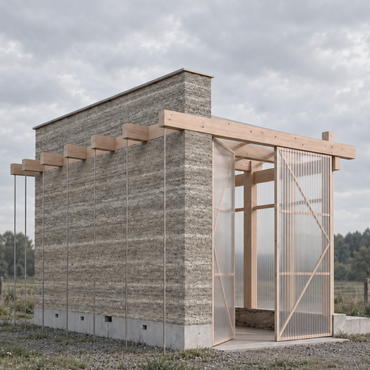
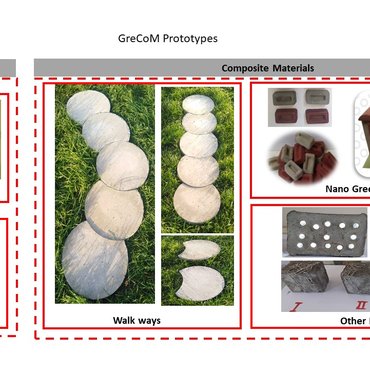
We produce sustainable exterior wall by upcycling excavated soil from the Rotterdam Ground Bank. Our business model combines direct material sales, custom manufacturing contracts, and circular engineering consultancy. By bridging traditional earthen construction with modern structural testing, we deliver commercially viable, climate-adapted building elements that drive the transition toward a circular built environment.
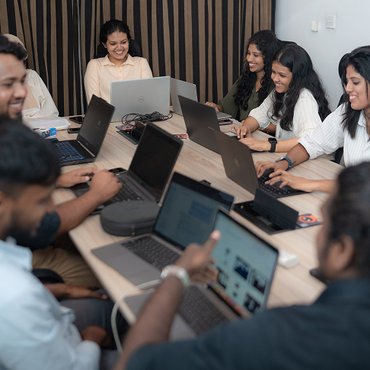
Acendae B.V. provides Dedicated Offshore Engineering Teams in Sri Lanka specifically built for digital agencies, SaaS scale-ups, and tech ventures in the Netherlands and Belgium. We bridge local European tech talent shortages by matching firms with full-time frontend, backend, QA, and UI/UX engineers who integrate directly into client workflows.
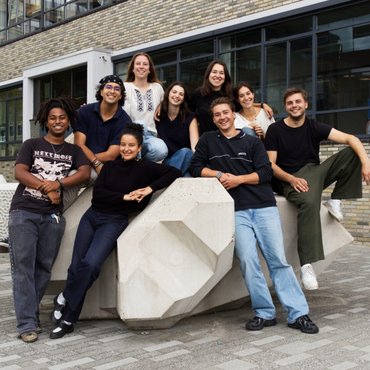
Constructing Resilience (CORE) is committed to executing innovative engineering projects in areas faced with natural or climate disasters, conflict or war, and/or public health emergencies in collaboration with affected locals, with the explicit goal of sustainably advancing local resilience. We want to build a platform and ultimately use it to construct community-led resilience and self-reliance in communities.
Also applied for The Green Village Award
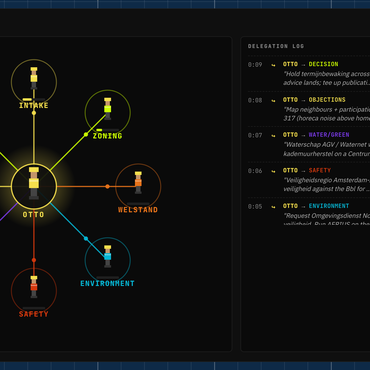
Digital Crane is an AI harness built for the construction sector: the rules, data, tools and approval gates that let AI agents do project work reliably. It ships as a team. Otto, a digital project manager, dispatches specialised sub-agents that mirror a project organisation chart, eighteen roles in the pipeline.

Foldable.Energy provides insight into real-world battery performance and lifespan degradation, bridging the persistent knowledge gap between suppliers and integrators, and developers. With an advanced simulation platform modeling thousands of battery configurations in hours, we eliminate design risks, lower costs, and provide a clear business case to accelerate integration.
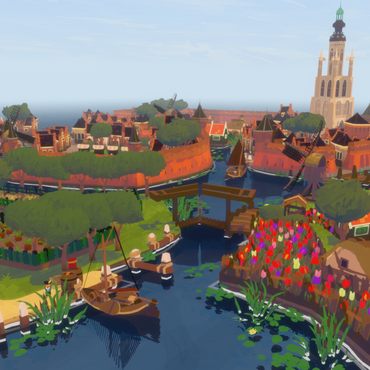
In POLDERS, players rebuild flooded Dutch towns as a 17th-century Dijkgraaf. The town grows the way it did historically: enclose water with dykes, drain it with windmills, and build on the polder that emerges.
Nobody lectures the player on urbanism. They discover, through play, why Dutch towns look the way they do and what it costs to keep them dry.
Also applied for The Green Village Award
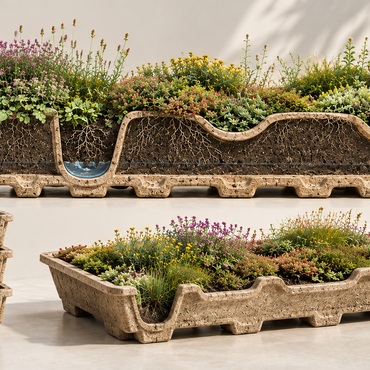
GreenTray is a modular, biobased green-roof system designed to maximise ecological and climate value within a low structural load. It combines variable substrate depths, targeted water retention and habitat diversity: deeper zones provide root volume and water storage, while shallower zones reduce weight.
Also applied for The Green Village Award
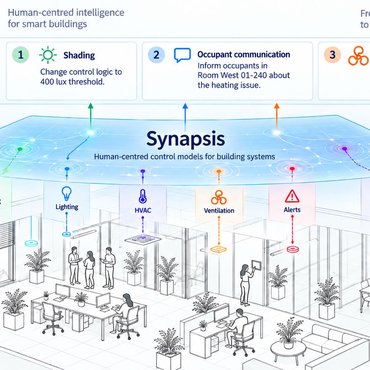
Human Centred Systems is developing Synapsis as its first commercial product: a human-centred intelligence and control platform for smart buildings. Synapsis connects to existing Building Management Systems, sensors and interfaces, and analyses building data through human-centred models to understand how operation affects occupant comfort, satisfaction, interaction, and acceptance.
Also applied for The Green Village Award
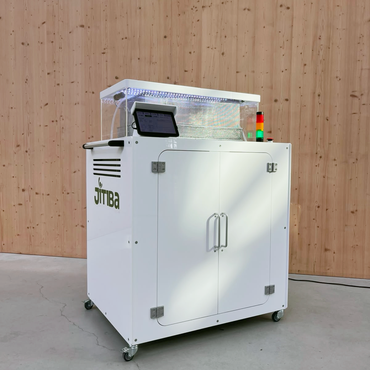
JiTiBa develops a modular wastewater treatment system using algaepearls. These are small beads that contain living microalgae. After conventional treatment, these algae help remove remaining nitrogen and phosphorus from the water before it is discharged or reused. The system is designed to be added to existing municipal or industrial treatment plants without major changes.
Also applied for The Green Village Award
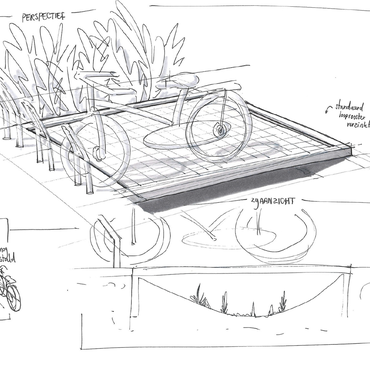
De parkeertuin is a modular system that combines bicycle parking, planting and rainwater collection in one compact urban element. A sunken trench collects rainwater at its lowest point, while a grating above provides space for bicycle parking. The parkeertuin creates room for both greenery and water management without sacrificing valuable urban space.
Also applied for The Green Village Award
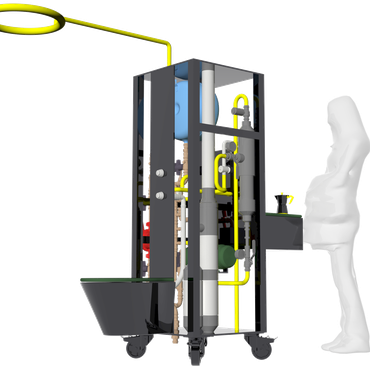
Medallón Agrícola is a compact, modular water-management system designed to connect household water use with family-scale food production. It integrates rainwater collection, storage, pressure, distribution, water separation, treatment, reuse and monitoring within one physical platform.
Also applied for The Green Village Award
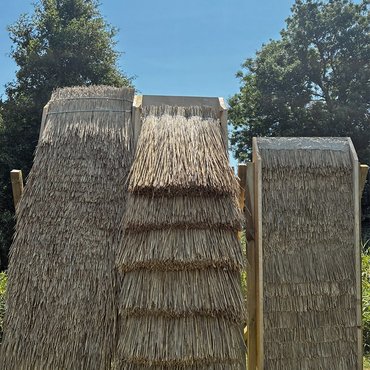
Veenweide Atelier develops a circular reed building system that connects climate-adaptive peatland management with sustainable cultivation and construction. This creates a new value chain in which wetland cultivation provides both ecological and economic value while supplying a locally grown biobased material for the built environment.
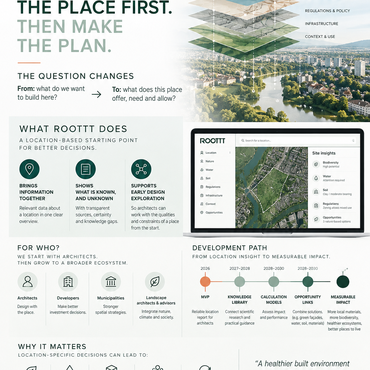
ROOTTT is a location intelligence platform for the built environment. It brings fragmented information about a site, such as soil, water, climate, ecology, regulations and spatial conditions together before design decisions are made. Instead of searching through many separate maps, viewers and government portals, architects start with one location-based overview.
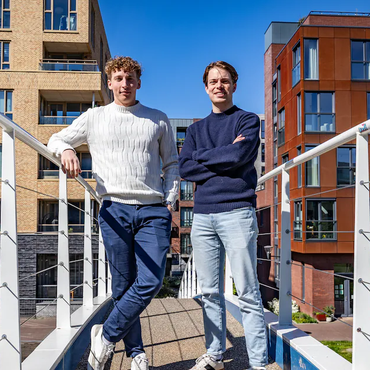
samenkoopgids.nl is a guided digital service for friends who want to buy a home together. The product we provide is a "samenkoopdossier" that brings preferences of the group together to share it with experts during the home-buying process. These parties such as the real estate agent, mortgage advisor and the notary will save time onboarding these groups by obtaining the group documents.
Also applied for The Green Village Award
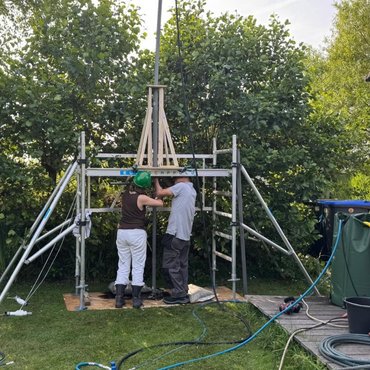
SPEER is developing a patented alternative to conventional drilling for installing vertical ground heat exchangers. SPEER offers a compact, fluid-assisted pushing technique that could significantly reduce installation costs, site disruption and material waste. By making ground-source heating and cooling more accessible, SPEER aims to accelerate the transition to low-carbon buildings and expand the use of renewable thermal energy in the built environment.
Also applied for The Green Village Award
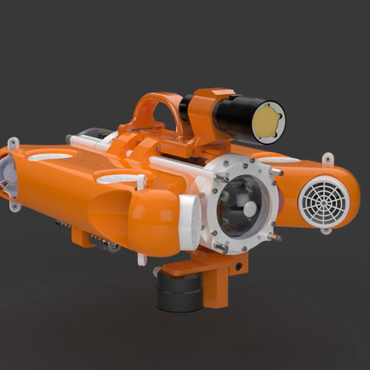
Subnexon sells underwater inspection of infrastructure as service. Preventative inspection (and maintenance) is incredibly hard to do in the Netherlands. Subnexon's added value therefore lies in a stark reduction in maintenance and operation costs for many organisations, such as water boards and construction companies.
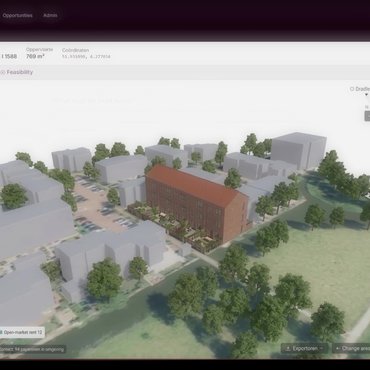
Vitruvius Software is creating software tools that help property developers to analyse potential development sites, generate massing plans using AI, and evaluate and compare different designs for their construction cost, revenue and embedded CO2, as well as compliance to building regulations.
Also applied for The Green Village Award
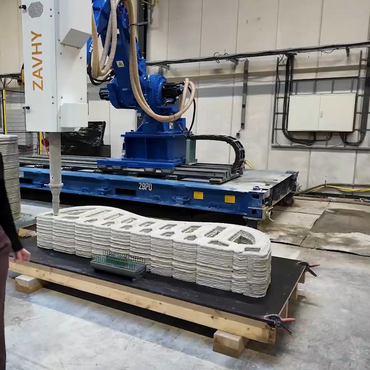
Zavhy develops reinforced 3D concrete printing technology for structural construction. Unlike conventional 3D concrete printing, which often remains limited by reinforcement and structural requirements, Zavhy integrates automated concrete printing with reinforcement technologies to enable load-bearing applications.
The Post-Launch Award supports entrepreneurs who have already launched their venture and are looking to take it further. Meet the ventures competing for €20,000 to support their next stage of development.
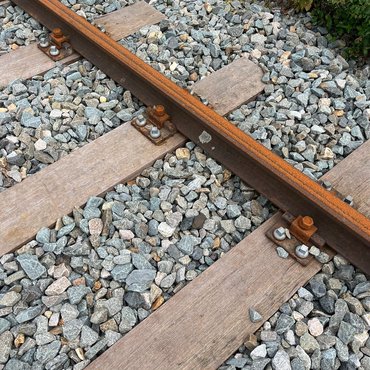
Dragonwood Rail develops and supplies Bamboo Composite Sleepers: a sustainable, high-performance alternative to tropical hardwood, concrete, plastic and other synthetic sleepers. The product is designed to fit existing rail fastening systems while offering a significantly lower environmental footprint and long service life.
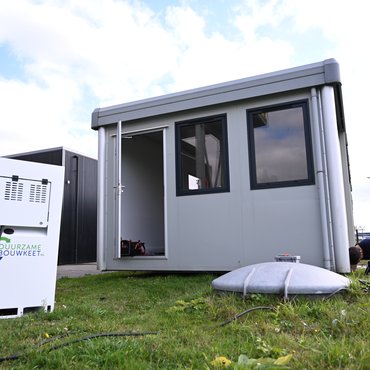
DuurzameBouwkeet builds the Ketenmanager: a patent-pending off-grid energy management system that replaces diesel generators on construction sites. Construction site generators are typically oversized for worst-case peaks, wasting most of their fuel. We take a fundamentally different approach: instead of matching the energy source to theoretical peak demand, we use real-time intelligence to manage demand itself.
Also applied for The Green Village Award
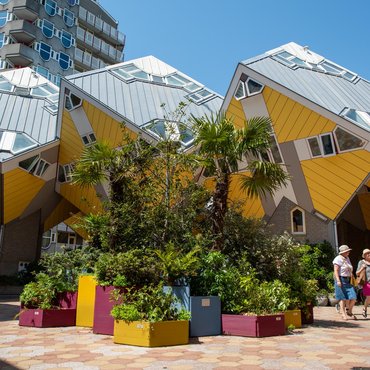
Flocci transforms urban environments into green, inviting spaces. Our modular planters, made from recycled plastic (post-consumer plastic), combine aesthetics with functionality, offering municipalities, housing associations, schools, and neighborhood groups an easy way to add more greenery. Flocci is a product and most of the times we co-operate a lot with local communities who want to 'green' their neighbourhood.
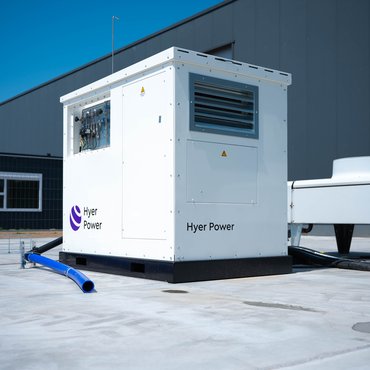
PHIAB (Power + Heat in a Box) is a modular combined heat and power unit based on PEM fuel cell technology, running on hydrogen. PHIAB integrates with heat pumps, thermal buffers, batteries and solar panels via EOS, our in-house optimization software, into one full energy system. The fuel cell's waste heat is reused in the connected heat system.
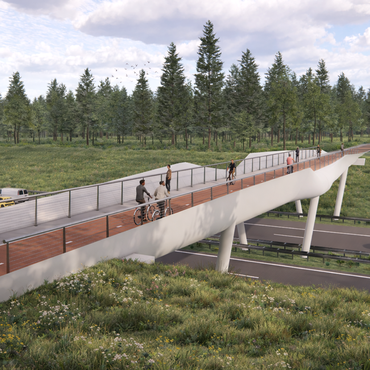
InfraBlades gives wind turbine blades a high-value second life as structural elements in civil infrastructure. Instead of shredding and burning the blades – which is costly and is not sustainable – we focus on repurposing complete blades in bridges. In this way, we create durable, sustainable infrastructure, and thereby address the infrastructure replacement challenge.
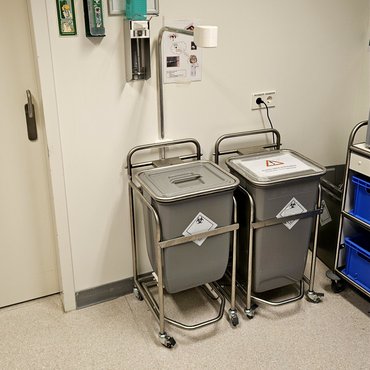
Sealed Cycle eliminates expensive sorting errors in medical waste to help healthcare institutions achieve goals like the Green Deal Duurzame Zorg. We build a universal add-on for existing waste bins, featuring computer vision and interactive visual nudging, to guide hospital staff in correct sorting, so they can focus on caring for patients.
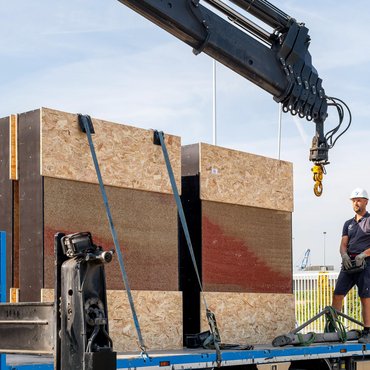
Springform develops the technology to produce hempcrete (kalkhennep) facades. Hempcrete has massive untapped potential to store carbon, but for modern construction, this ancient material needed a "tech update". Our machine, the PlantPrinter, digitally controls the ramming process that compacts hempcrete into prefab elements. We licence our technology to existing prefab concrete producers, using their idle capacity and infrastructure.
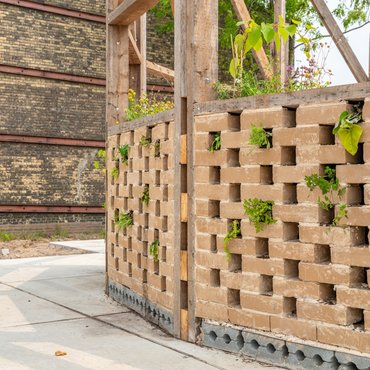
Stadsgrond makes circular building materials from excavated soil and city waste - compressed earth blocks and floors as they share the same raw materials. Blocks (clay binder, crushed waste aggregates) are already in commercial production. Floors, made the same way within 50 km of Rotterdam, are currently pilot-tested at small scale at The Green Village.
© fotograaf, Stadsgrond
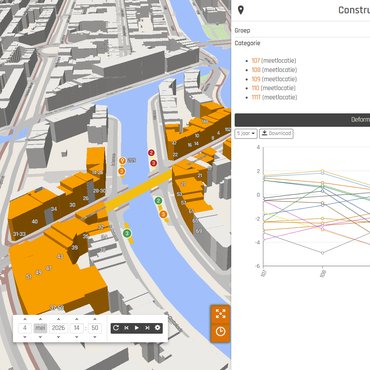
StellaSpark Nexus is a real-time digital twin platform engineered to monitor, simulate, and optimize the built environment. Tailored for infrastructure management, urban planning, and construction monitoring, Nexus unifies live streams from IoT sensors, geospatial datasets, and site photos into interactive 2D and 3D maps.
The Green Village Award supports ventures developing innovations that can be tested and further developed in a real-world environment. The Award offers €5,000 in funding and €15,000 worth of in-kind support through The Green Village.
Ventures can apply for The Green Village Award independently or alongside the At-Launch or Post-Launch Award. Below, we introduce the two ventures that applied exclusively for The Green Village Award.
In addition, 13 ventures featured in the categories above have also applied for The Green Village Award:
From the At-Launch category: Aarde Collective; Digital Crane; GreCoM; Green Tray; JiTiBa; Kiemkamer; Human-Centred Systems; Medallón Agrícola; Regenerative Dutch Reed; SPEER; Subnexon; Zahvy.
From the Post-Launch category: Flocci
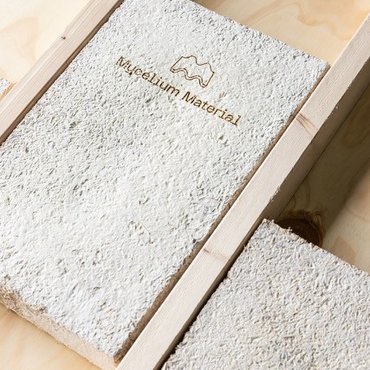
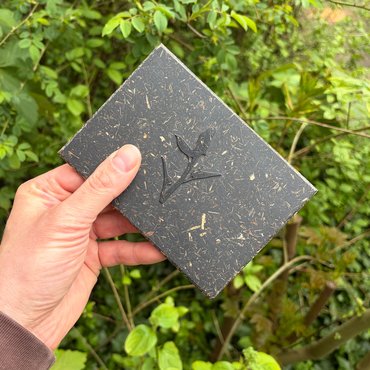
Foundation Why Knot develops biobased materials from Japanese knotweed, an invasive plant species that is currently treated as a waste stream. The problem we address is twofold: invasive plants require costly management and disposal, while the built environment relies heavily on materials with significant environmental impact.
Category: Entrepreneurship Awards